



At Builders Essex Ltd, we excel in crafting high-quality, bespoke windows that perfectly marry traditional craftsmanship with contemporary design and performance.
- Email Us
- 07984 326 013
- Get A Quote
Damp can be one of the most frustrating problems for homeowners. What may initially look like a small patch of discoloration on a wall can develop into peeling paint, damaged plaster, mould growth, unpleasant odours and, in more serious situations, damage to building materials.
For homeowners searching for damp proofing Essex, understanding the cause of the problem is an important first step. Damp is not always caused by a failed damp-proof course. It can result from leaking gutters, damaged brickwork, poor ventilation, plumbing problems, condensation, penetrating moisture or groundwater.
At Builders Essex LTD, we understand the importance of identifying the underlying cause before recommending a solution. Effective damp proofing is about more than simply covering stains. It involves diagnosing the source of moisture and carrying out suitable remedial work to help protect the property for the long term.
Damp proofing refers to measures designed to prevent or control unwanted moisture entering or travelling through a building. In homes, this can involve several different techniques depending on the type and source of damp.
Many properties have a damp-proof course (DPC) built into the walls. This is a horizontal barrier designed to prevent moisture from rising through masonry from the ground. However, a DPC is only one part of a property’s overall protection against moisture.
Damp proofing can also involve:
The appropriate approach depends on what is causing the damp.
Essex contains a wide range of property types, from older period homes and cottages to modern houses, extensions and converted buildings. Different construction methods and materials can create different moisture-related challenges.
Older properties may have solid walls, traditional masonry and construction details that behave differently from modern cavity-wall buildings. Meanwhile, newer homes can experience problems if ventilation is inadequate or if defects develop around roofs, windows, doors or external walls.
Local weather conditions can also contribute to moisture entering a property. Persistent rainfall, wind-driven rain and fluctuating temperatures can expose weaknesses in roofs, walls, gutters and external finishes.
This is why homeowners looking for damp proofing Essex should avoid assuming that every damp problem has the same cause.
Recognising the early signs of damp can help prevent a relatively manageable issue from becoming a major repair project.
Brown, yellow or dark patches on walls may indicate moisture penetration. The location and pattern of the staining can provide useful clues about the source.
For example, damp concentrated around ceilings or upper sections of walls may suggest penetrating moisture, while moisture concentrated towards the bottom of walls can sometimes be associated with rising damp.
Moisture can cause paint to blister, flake or peel. Wallpaper may also become loose or develop visible staining.
Simply repainting the affected area usually does not solve the problem if moisture continues to enter the wall.
Black, green or white mould can develop where there is persistent moisture and insufficient ventilation. Bathrooms, kitchens, bedrooms and areas behind furniture can be particularly vulnerable.
Although condensation is a common cause of household mould, it is important not to automatically assume that every mould problem is caused by condensation.
A persistent musty smell may indicate excess moisture within walls, floors, carpets or other materials.
If an unusual smell remains despite cleaning and ventilation, investigating the underlying cause can be worthwhile.
Plaster can deteriorate when exposed to persistent moisture. It may become powdery, cracked, swollen or loose.
Where walls have experienced prolonged damp, removing and replacing damaged plaster may form part of the remedial work after the moisture source has been addressed.
White, powdery deposits on masonry are often known as efflorescence. These can form when moisture moves through building materials and leaves behind dissolved salts as it evaporates.
Efflorescence does not automatically prove that a property has rising damp, but it can be a useful indication that moisture movement should be investigated.
Before undertaking damp proofing, it is important to understand where the moisture is coming from.
Rising damp occurs when groundwater moves upwards through porous masonry. A functioning damp-proof course is designed to restrict this movement.
Potential signs can include dampness concentrated at the lower part of walls, damaged skirting boards, peeling finishes and salt deposits.
However, rising damp is often incorrectly diagnosed. Other problems can create similar symptoms, so a proper inspection is important before any treatment is specified.
Penetrating damp occurs when moisture enters a property from outside.
Common causes include:
Penetrating damp can appear at various heights within a building depending on where water is entering.
Condensation happens when warm, moist air comes into contact with colder surfaces.
Everyday activities such as cooking, showering, drying clothes and bathing generate moisture. Without sufficient ventilation, that moisture can settle on walls, ceilings, windows and other cold surfaces.
Improving extraction, ventilation and airflow can often help manage condensation-related moisture.
A leaking pipe, radiator, washing machine connection or bathroom fitting can introduce substantial amounts of moisture into a building.
Sometimes the source is obvious, but concealed leaks can be more difficult to identify. If damp appears close to plumbing installations, the relevant pipework should be checked.
Blocked drains, inadequate surface-water drainage or ground levels that direct water towards walls can contribute to damp problems.
External drainage should therefore form part of a comprehensive inspection where appropriate.
One of the biggest mistakes homeowners can make is treating the visible symptom without identifying the cause.
For example, painting over a damp patch may temporarily improve its appearance, but if water continues entering the wall, the staining and deterioration may return.
Similarly, installing a new damp-proof course when the real problem is a leaking gutter may fail to resolve the issue.
A professional assessment should consider the property’s construction, the location of damp, external conditions, ventilation, plumbing, drainage and other potential causes.
This allows the remedial strategy to be based on evidence rather than assumptions.
There is no universal damp-proofing treatment suitable for every property. Depending on the diagnosis, different methods may be considered.
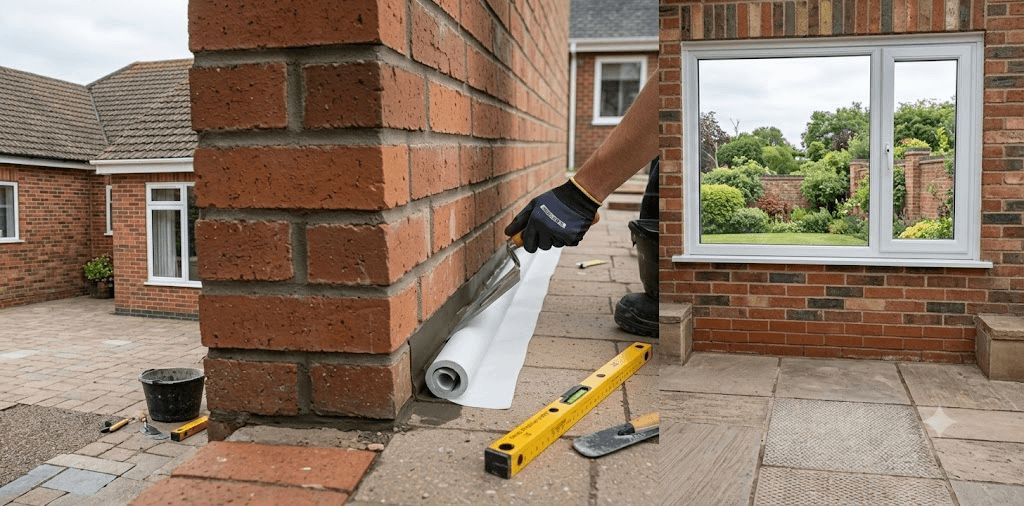
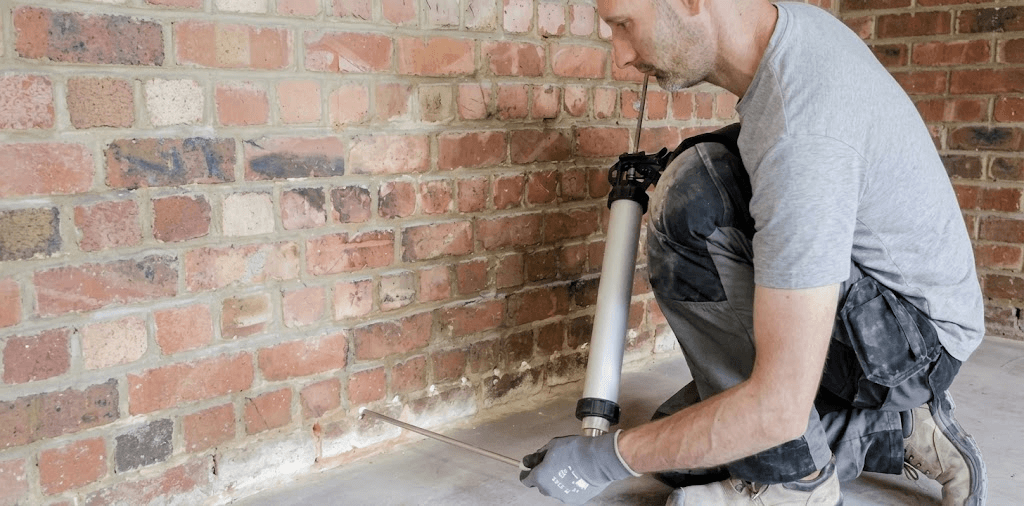
A chemical injection system can sometimes be used to create or restore a horizontal moisture barrier within masonry.
This approach may be appropriate for certain properties where rising damp has been correctly identified.
In areas such as basements and below-ground rooms, specialist waterproofing systems may be considered where moisture pressure is an issue.
The correct system depends on the building, water conditions and intended use of the space.
Damaged bricks and defective mortar joints can provide pathways for rainwater to enter a property.
Repairing brickwork and repointing defective areas can therefore play an important role in preventing penetrating damp.
Damp problems can sometimes be resolved by addressing defects outside the building.
Potential work may include repairing gutters, replacing damaged roof components, improving flashing, repairing render or correcting defects around windows and doors.
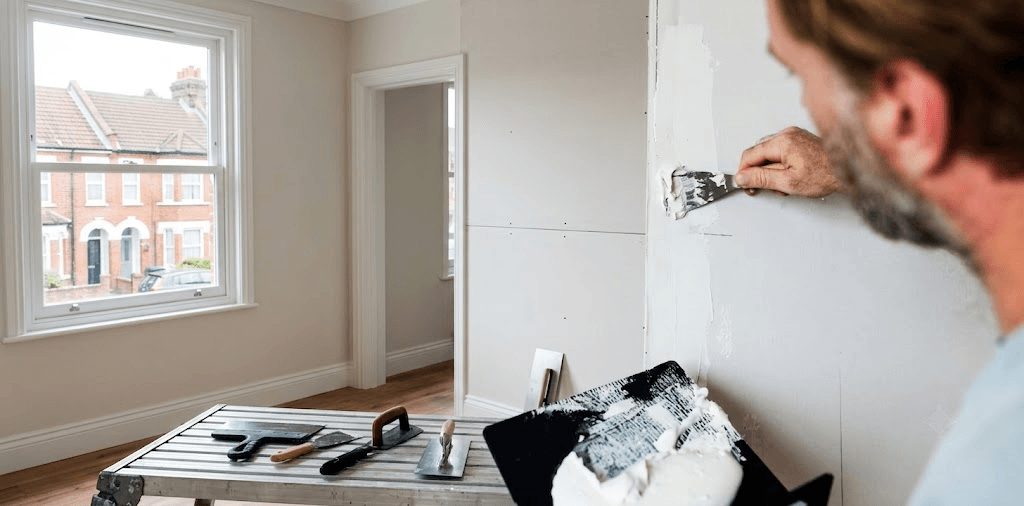
Where existing plaster has become heavily contaminated or damaged by prolonged moisture, it may need to be removed and replaced after the underlying issue has been resolved.
This is particularly important where salts have accumulated within the plaster.
Older homes often require a thoughtful approach to damp management.
Traditional buildings may have been constructed using materials and techniques that allow walls to absorb and release moisture differently from modern cavity-wall construction.
Applying inappropriate waterproof coatings or impermeable materials can sometimes prevent a wall from drying naturally.
For this reason, damp-related work in older Essex properties should take the building’s age, construction and materials into account.
The objective should not simply be to stop moisture at one point. The wider movement of moisture through the building should also be considered.
Damp does not always mean that a building has serious structural problems. However, prolonged moisture exposure can contribute to deterioration of certain materials.
Persistent moisture may affect:
Where timber remains damp for extended periods, there can also be a risk of timber decay.
Early investigation can therefore help homeowners address problems before the required repair becomes more extensive.
The terms damp proofing and waterproofing are sometimes used interchangeably, but they can describe different approaches.
Damp proofing generally focuses on limiting or controlling moisture entering a building or moving through building materials.
Waterproofing typically provides a more comprehensive barrier against water and is particularly relevant to areas exposed to significant water pressure, such as basements.
The correct solution depends on the property’s construction and the source of moisture.
Although not every damp problem can be prevented, regular property maintenance can reduce the likelihood of moisture-related issues.
Blocked gutters can cause rainwater to overflow against external walls. Regular cleaning and inspection can help prevent unnecessary moisture exposure.
Missing, cracked or damaged roof coverings can allow rainwater into the building.
Roof inspections can help identify problems before they lead to widespread internal damage.
Cracked render, damaged pointing and defective brickwork should be addressed promptly.
Small external defects can become more significant if water repeatedly penetrates the building.
Bathrooms and kitchens should have adequate ventilation to remove moisture generated during everyday activities.
Opening windows when appropriate and using extractor fans can also help reduce humidity.
Wet clothes release significant amounts of moisture into indoor air. Where possible, drying laundry outside or using suitable ventilation can reduce condensation.
Check visible pipes, taps, radiators and appliances for signs of leaks.
A small leak can cause substantial damage if it continues unnoticed.
Choosing the right contractor is an important part of addressing a damp problem.
When comparing providers of damp proofing Essex, homeowners should consider experience, diagnostic approach, workmanship, communication and the suitability of the proposed treatment.
A reputable contractor should be willing to explain:
Be cautious of recommendations that immediately propose extensive damp-proofing work without properly considering other potential sources of moisture.
At Builders Essex LTD, we understand that every property is different. Our approach focuses on understanding the condition of the building and identifying practical solutions for moisture-related problems.
From older homes to modern properties, effective damp management requires attention to both the visible symptoms and the underlying cause.
Our building knowledge allows damp-related issues to be considered alongside other aspects of the property, including masonry, roofing, external walls, drainage, plaster and general building condition.
Whether you have noticed a small damp patch or are dealing with a more persistent moisture problem, professional advice can help you determine the appropriate next step.
The cost of damp proofing varies considerably from one property to another.
Factors that can influence the overall cost include:
For this reason, homeowners should be wary of relying on a standard price without an inspection.
A detailed assessment can help establish the extent of the problem and the work required.
It is generally sensible to investigate damp as soon as you notice persistent signs.
You should consider arranging an inspection if you notice:
Early investigation can help distinguish between condensation, plumbing leaks, penetrating damp, rising damp and other causes.
Damp should never be treated as merely a cosmetic problem. While a small stain may seem harmless, persistent moisture can damage finishes and building materials if the underlying cause remains unresolved.
The most effective approach is to identify where the moisture is coming from and then select a suitable repair or damp-proofing solution.
For homeowners searching for damp proofing Essex, choosing an experienced building contractor can provide greater confidence that the problem is being approached as part of the property’s overall condition rather than through a one-size-fits-all treatment.
At Builders Essex LTD, we provide building expertise to help Essex homeowners address damp and moisture-related concerns with practical, property-specific solutions.
If you have noticed signs of damp in your home, don’t wait for the problem to become more extensive. Contact Builders Essex LTD to discuss your property and arrange professional advice on suitable damp proofing solutions in Essex.
